






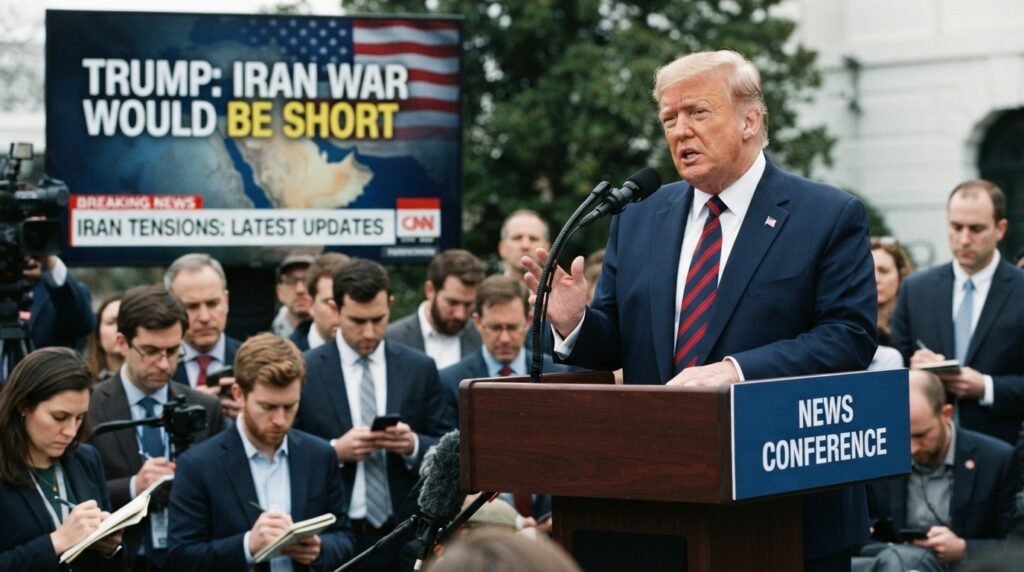


The latest trump news iran war developments show that the conflict between the United States and Iran remains unresolved, with diplomacy facing serious obstacles and the risk of renewed escalation still high. As of August 18, 2026, the 60-day negotiating period connected to a U.S.-Iran memorandum has expired without a broader peace agreement. President Donald Trump has said there are no current talks or scheduled negotiations with Iran, while Iranian officials have indicated that Tehran wants the United States to meet several conditions before the Strait of Hormuz can fully reopen.
The situation is particularly important because the conflict is no longer only a military story. It affects global oil markets, shipping, regional security, diplomacy, inflation, and America’s foreign-policy strategy. The Strait of Hormuz, through which a major share of global energy shipments normally passes, has become one of the central issues in negotiations between Washington and Tehran.
What Is the Latest Trump News Iran War Update?
The most significant development is the expiration of the 60-day negotiating window without a final agreement. The arrangement was intended to create a pathway toward ending the U.S.-Iran war, addressing Iran’s nuclear program, and restoring normal commercial traffic through the Strait of Hormuz. Instead, disagreements over sanctions, military activity, shipping, and control of the waterway have prevented a lasting settlement.
On August 18, Trump said there were no talks currently taking place with Iran and none scheduled. At the same time, reports indicate that Iranian officials continue to demand changes to U.S. policy, including relief from sanctions and other measures connected to the blockade and military pressure. This gap between Washington and Tehran makes the immediate future difficult to predict.
Another major development involves Oman. Oman has traditionally played an important diplomatic role between Iran and the United States, but tensions have increased after Trump threatened military action if Oman interfered with his objectives concerning the Strait of Hormuz. The remarks have raised concerns that an important channel for regional diplomacy could become even more fragile.
Why the Iran War Matters Beyond the Middle East
The trump news iran war story has become a global economic issue because of the Strait of Hormuz. The waterway connects the Persian Gulf with the Gulf of Oman and is a crucial route for energy shipments. Any prolonged disruption can affect oil prices, shipping costs, insurance rates, and consumer prices around the world.
Recent market movements demonstrate the sensitivity of energy markets to developments in the conflict. Reuters reported that Brent crude moved above $91 per barrel as investors reacted to renewed uncertainty surrounding the U.S.-Iran situation and the future of shipping through Hormuz.
The economic impact can extend far beyond gasoline prices. Higher transportation and energy costs can feed into food prices, manufacturing expenses, airline costs, and household budgets. Businesses also have to consider increased insurance premiums and longer shipping routes when regional waterways become dangerous.
“The real test lies in whether a robust and verifiable agreement is reached, rather than vague diplomatic affirmations.”
That observation captures one of the biggest challenges facing negotiators. Statements from political leaders can change quickly, but markets and shipping companies tend to respond to what actually happens on the ground.
The Strait of Hormuz Is at the Center of the Dispute
One of the most important related keywords in the trump news iran war discussion is the Strait of Hormuz. The waterway has become a central bargaining issue because Washington wants commercial shipping to move freely, while Iran has linked reopening the strait to wider political and economic demands.
Reuters reported that possible arrangements have involved disagreements over shipping control, inspections, and potential cargo fees. These details may sound technical, but they could determine whether a proposed agreement works in practice.
A successful reopening would require more than a political announcement. Shipping companies need confidence that vessels can travel safely, insurance costs need to become manageable, and military restrictions need to be reduced. Regular commercial traffic would be one of the clearest signs that a genuine de-escalation is taking place.
Why Trump Is Taking a Hard Line on Iran
Trump’s approach to Iran has relied heavily on economic pressure, military strength, and demands for significant concessions. His public statements have frequently emphasized that Iran must meet U.S. conditions rather than expecting Washington to compromise first.
This strategy is designed to increase pressure on Tehran and potentially force Iranian leaders back into negotiations from a weaker position. However, the strategy also carries risks. If Iran refuses to give in, continued pressure can produce a prolonged conflict rather than a quick settlement.
Reuters previously reported that Trump’s Iran dilemma had become increasingly difficult as the conflict continued without achieving several of the administration’s major objectives. Further military escalation could deepen the conflict, while accepting a compromise could generate political criticism at home and abroad.
The central question is therefore not simply whether Trump wants a deal. It is whether Washington and Tehran can find terms that both sides consider acceptable enough to stop the fighting and maintain the agreement.
How the Ceasefire Broke Down
The history of the conflict helps explain the current trump news iran war situation. A memorandum reached in June was supposed to create a framework for ending hostilities and beginning negotiations on longer-term issues. However, the arrangement quickly came under pressure.
Trump later declared the ceasefire over after renewed attacks and military exchanges. In July, he continued to say that negotiations could take place even while the United States no longer considered itself bound by the ceasefire.
The breakdown created a difficult diplomatic environment. Each side accused the other of violating commitments, while mediators attempted to keep negotiations alive. Iran has argued that Washington needs to return to the terms of the earlier interim agreement, while the Trump administration has continued to demand substantial changes in Iranian behavior.
The result is a conflict in which military pressure and diplomacy have repeatedly existed side by side.
What Iran Wants From the United States
Iran’s demands are an important part of understanding the trump news iran war developments. Iranian officials have called for changes involving U.S. sanctions, frozen assets, military pressure, and the blockade.
According to Reuters, Iranian officials have said the United States should return to provisions of the June interim agreement and establish a clear timetable for fulfilling its commitments. Tehran has also connected the reopening of the Strait of Hormuz to those conditions.
For Iran, these demands are not simply economic. They are also about sovereignty and security. Tehran is unlikely to accept an arrangement that it believes leaves the country vulnerable to another round of attacks without meaningful guarantees.
For Washington, however, removing pressure without receiving substantial concessions could be viewed as a strategic mistake. That difference in priorities explains why negotiations have been so difficult.
The Role of Oman and Regional Mediators
Oman has played a significant role in Middle Eastern diplomacy and has historically been useful as a communication channel between Iran and Western governments. That makes the recent tensions involving Muscat especially important.
Reports say Iran and Oman have been discussing arrangements related to commercial shipping through Hormuz. At the same time, Trump has publicly criticized Oman’s involvement, increasing concerns about whether the country can continue serving as a trusted intermediary.
Other countries, including Qatar and Pakistan, have also been involved in diplomatic efforts. Their involvement illustrates how the conflict has become a regional security problem rather than a simple bilateral dispute between Washington and Tehran.
The more countries become involved, the greater the potential for diplomacy—but also the greater the possibility that a misunderstanding involving another regional actor could widen the conflict.
How the War Could Affect Oil Prices and the Global Economy
Oil remains one of the most important economic indicators to watch. When shipping through Hormuz becomes uncertain, traders immediately consider the possibility of supply shortages and higher transportation costs.
Recent reporting showed Brent crude rising above $91 a barrel amid renewed fears surrounding the U.S.-Iran conflict. Only limited tanker traffic was reported through the strait during a recent period, reflecting the caution of commercial operators.
| Area | Potential impact of prolonged conflict |
|---|---|
| Oil prices | Higher prices caused by supply and shipping concerns |
| Shipping | Increased insurance and transportation costs |
| Inflation | Greater pressure on fuel and consumer prices |
| Airlines | Higher jet-fuel and operating expenses |
| Manufacturing | Increased energy and logistics costs |
| Global markets | Greater volatility and investor uncertainty |
| Middle East security | Higher risk of regional escalation |
The economic consequences could become more serious if the conflict continues for months. Governments may face renewed inflationary pressure while central banks have to balance economic weakness against higher energy prices.
What Could Happen Next?
The future of the trump news iran war remains uncertain, but several broad possibilities stand out. The first is a return to negotiations through regional intermediaries. Even when direct U.S.-Iran communication is limited, countries such as Pakistan, Qatar, and Oman can potentially help deliver messages and develop compromise proposals.
The second possibility is continued stalemate. This could mean neither side launches a major new offensive, but neither accepts the other’s conditions either. Such an outcome could keep shipping disrupted and oil prices elevated while creating a long-running geopolitical crisis.
The third and more dangerous possibility is renewed military escalation. Additional attacks could trigger retaliation against U.S. forces, regional allies, commercial vessels, or infrastructure. That could transform a difficult conflict into a much broader regional crisis.
What Should Readers Watch in Future Trump Iran War News?
Anyone following the trump news iran war should look beyond dramatic political statements and focus on measurable developments. The most useful indicators include actual shipping through the Strait of Hormuz, changes in military deployments, oil prices, sanctions policy, and evidence of direct or indirect negotiations.
Another important indicator is whether regional mediators remain involved. If countries such as Oman, Qatar, or Pakistan can maintain communication between Washington and Tehran, the chances of a diplomatic solution may improve.
Readers should also distinguish between an announcement of a possible deal and an implemented agreement. Earlier developments demonstrated that political optimism can disappear quickly when military actions or disagreements over key terms return.
The Political Pressure on Trump
The trump news iran war is also becoming an important domestic political story in the United States. A prolonged war can create pressure on a president because voters may become concerned about military casualties, energy prices, government spending, and the possibility of an open-ended conflict.
Reuters has reported that Trump’s political position has faced pressure as the war has continued and the administration has struggled to produce a clear exit strategy.
At the same time, Trump has built much of his political identity around projecting strength and negotiating from a position of power. A major compromise with Iran could therefore become politically complicated. The administration has to balance the desire for a diplomatic settlement with the need to demonstrate that its military and economic pressure produced meaningful results.
What a Real Peace Deal Would Need
A lasting settlement would probably need to address several issues simultaneously. Simply declaring a ceasefire would not necessarily resolve the underlying disputes between the two governments.
A durable agreement would need clear rules concerning military activity, sanctions, Iran’s nuclear program, shipping through Hormuz, verification mechanisms, and the sequence in which both sides fulfill their commitments.
| Key issue | Why it matters |
|---|---|
| Nuclear program | Central to U.S. security concerns |
| Sanctions | Critical to Iran’s economic recovery |
| Strait of Hormuz | Essential for international energy trade |
| Military activity | Necessary to prevent renewed attacks |
| Verification | Helps both sides confirm compliance |
| Regional security | Reduces risk of a wider Middle East conflict |
| Diplomatic channels | Provides a way to manage future disputes |
The biggest challenge is trust. If either side believes the other will abandon the agreement after receiving concessions, there is little incentive to compromise.
Conclusion
The latest trump news iran war developments point to a conflict that remains highly unpredictable. The expiration of the 60-day negotiating period without a final peace agreement has increased uncertainty, while Trump’s statement that there are currently no scheduled talks with Iran suggests that diplomacy is facing a difficult moment.
The Strait of Hormuz remains the biggest immediate economic and strategic concern. Its importance to global energy shipments means that even limited disruption can influence oil prices, shipping costs, inflation, and financial markets around the world. At the same time, regional mediation remains an important potential path toward de-escalation.
For now, the most important question is whether Washington and Tehran can move away from threats and military pressure toward a verifiable agreement. Until that happens, the conflict will continue to carry significant risks for the Middle East and the global economy.
Frequently Asked Questions
What is the latest Trump news Iran war update?
The latest trump news iran war update is that the 60-day negotiating period has expired without a final peace agreement. Trump said on August 18 that there were no current talks with Iran and none scheduled, while Iran continues to demand changes to U.S. policy before fully reopening the Strait of Hormuz.
Is the Iran war still ongoing?
Yes. The conflict remains unresolved, with military pressure, sanctions, shipping restrictions, and diplomatic disputes continuing. Although there have been ceasefire and negotiation efforts, the broader agreement has not produced a lasting settlement.
Why is the Strait of Hormuz important in Trump Iran war news?
The Strait of Hormuz is one of the world’s most important energy shipping routes. Disruption can reduce the movement of oil and increase shipping and insurance costs. That is why the waterway has become a major issue in negotiations between the United States and Iran.
Could Trump and Iran return to negotiations?
A return to negotiations remains possible, particularly through regional mediators. However, as of August 18, Trump said there were no talks taking place and none scheduled. This means readers should watch for concrete diplomatic developments rather than assume that negotiations are imminent.
How could the Iran war affect oil prices?
A prolonged conflict could place upward pressure on oil prices because traders worry about reduced supplies and disruptions to shipping through Hormuz. Recent market movements have already reflected those concerns, with Brent crude rising above $91 per barrel amid renewed uncertainty.
What role is Oman playing in the conflict?
Oman has historically been an important diplomatic intermediary between Iran and Western governments. Recent reports indicate that Oman and Iran have been discussing arrangements for commercial shipping through the Strait of Hormuz, while Trump’s criticism of Oman’s role has added another layer of tension.
What should people watch for in future Trump Iran war updates?
The most useful indicators are actual shipping activity through Hormuz, changes in military operations, oil prices, sanctions decisions, statements from Iranian and U.S. officials, and evidence of direct or indirect negotiations. These developments are more meaningful than isolated political statements because they show whether conditions are genuinely improving.