







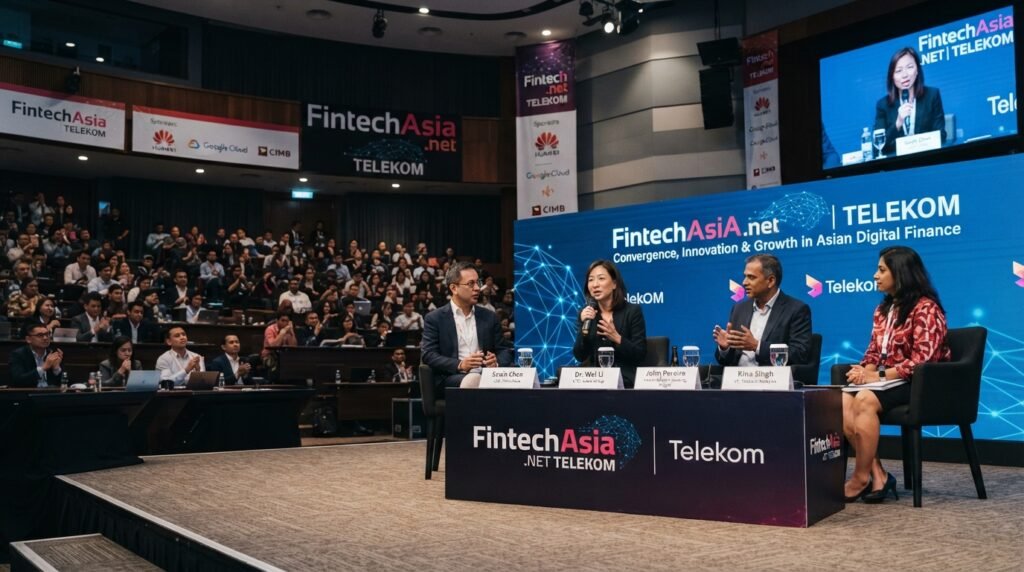


The digital economy across Asia is developing at remarkable speed, and telecommunications networks are playing a central role in that transformation. As mobile connectivity, digital payments, cloud services, artificial intelligence, and online banking become increasingly interconnected, businesses and consumers are looking for reliable information about the technologies shaping this ecosystem. The keyword fintechasia .net telekom sits at the intersection of financial technology, telecommunications, and digital transformation, making it an interesting topic for anyone researching Asia’s rapidly changing technology landscape.
Telecommunications companies are no longer simply providers of calls and internet connections. They increasingly support digital wallets, mobile banking, identity services, cloud infrastructure, e-commerce, and enterprise technology. At the same time, fintech companies are using telecom infrastructure to deliver faster and more accessible financial services. Understanding this relationship can help readers see why connectivity has become such an important part of modern financial technology.
What Is FintechAsia.net Telekom?
The phrase fintechasia .net telekom combines several concepts associated with the digital economy. “Fintech” generally refers to financial technology, while “Asia” points toward one of the world’s most dynamic markets for digital financial services. “Telekom,” commonly associated with telecommunications, highlights the importance of mobile networks and communication infrastructure in delivering those services.
It is important to distinguish between a keyword or search phrase and a verified corporate entity. A search term does not automatically establish that a specific website, telecom company, or financial organization officially operates under that name. Readers should therefore verify ownership, business registration, official announcements, and other trustworthy sources before treating information associated with the phrase as an authoritative corporate profile.
Why Telecommunications Matter to Fintech
Financial technology depends heavily on connectivity. Mobile applications need stable internet access, digital wallets require communication between users and financial institutions, and online banking platforms depend on secure data networks. Without reliable telecommunications infrastructure, many fintech services would struggle to operate at scale.
This relationship is particularly important in markets where mobile phones are the primary gateway to the internet. Instead of relying exclusively on traditional banking infrastructure, consumers can use smartphones to transfer money, make purchases, receive payments, and access financial services. In this environment, telecom networks become a critical foundation for financial inclusion.
“Connectivity is increasingly becoming the infrastructure layer on which digital financial services are built.”
The growth of 4G, 5G, fiber networks, cloud computing, and mobile applications has therefore created opportunities for fintech businesses to reach customers faster. The connection between fintech and telecommunications is not merely technical; it can influence how businesses design products and how consumers interact with financial services.
The Role of Mobile Connectivity in Digital Finance
Mobile connectivity has changed the way people interact with money. Traditional financial services often required customers to visit a physical branch, complete paperwork, or use specialized banking infrastructure. Mobile fintech applications can significantly reduce these barriers by allowing customers to access services from a smartphone.
The relevance of fintechasia .net telekom can be understood through this broader relationship between mobile communications and digital finance. Telecom infrastructure provides the connectivity, while fintech platforms provide financial functionality. Together, they can create a convenient ecosystem where users can perform transactions from almost anywhere.
Mobile connectivity can also help businesses reach underserved customers. Small businesses, independent workers, and consumers in areas with limited access to physical banking branches may benefit from mobile payment systems and digital financial platforms. However, access alone is not enough. Security, affordability, digital literacy, and regulatory oversight remain essential.
Fintech and Telecom Partnerships Across Asia
Across Asian markets, telecom operators and fintech companies have increasingly explored partnerships and integrated digital services. These collaborations can include mobile payment solutions, digital wallets, identity verification, merchant services, and financial applications.
A telecom company may already have millions of customers and an established billing relationship with users. A fintech company, meanwhile, may have specialized expertise in payments, lending, financial analytics, or digital banking. Combining these capabilities can create opportunities for both sides while potentially improving convenience for consumers.
The fintechasia .net telekom concept is therefore relevant to a broader industry trend: telecommunications infrastructure is becoming increasingly connected to financial technology ecosystems. The exact nature of any particular company or platform should still be verified independently rather than assumed from a keyword.
Key Technologies Connecting Fintech and Telecom
Several technologies contribute to the growing relationship between telecommunications and financial technology. Mobile broadband is one of the most obvious because financial applications depend on consistent connectivity. Faster networks can improve application performance, transaction communication, and access to cloud-based services.
Cloud computing is another important component. Financial platforms can use cloud infrastructure to process large volumes of information, while telecom operators can use advanced computing systems to manage network operations and customer services. Artificial intelligence and machine learning can also help identify suspicious transactions, personalize services, and analyze customer behavior.
| Technology | Role in Fintech | Telecom Connection |
|---|---|---|
| 4G and 5G | Faster mobile financial services | High-speed mobile connectivity |
| Cloud computing | Scalable financial applications | Network and data infrastructure |
| AI and machine learning | Fraud detection and analytics | Network intelligence and automation |
| APIs | Connect financial services | Integrate digital platforms |
| Digital identity | Customer verification | Mobile identity and authentication |
| IoT | Connected payment and business services | Device connectivity |
| Cybersecurity | Protect financial information | Secure communications and networks |
These technologies help explain why the fintech and telecom industries are becoming increasingly interconnected. The more digital financial services expand, the more important secure and reliable communication infrastructure becomes.
Digital Payments and the Telecom Ecosystem
Digital payments are among the clearest examples of fintech and telecommunications working together. Consumers increasingly expect to pay through mobile applications, QR codes, digital wallets, contactless technologies, and online payment platforms.
Telecom networks allow these transactions to communicate between applications, payment providers, merchants, and financial institutions. Although the actual financial transaction may involve several different organizations, connectivity helps ensure that the required information can move between systems.
For businesses, digital payments can also provide advantages beyond convenience. Electronic transactions can create digital records, simplify reconciliation, and support online commerce. Small merchants may benefit from payment systems that allow them to accept digital transactions without investing heavily in traditional infrastructure.
Financial Inclusion and Mobile Technology
One of the strongest arguments for combining fintech with telecommunications is financial inclusion. Millions of people globally have historically faced barriers to traditional banking, including distance, cost, documentation requirements, or limited availability of physical branches.
Mobile technology can reduce some of these barriers. A customer with a compatible phone and network connection may be able to access financial services without visiting a traditional branch. Digital accounts, payment services, and mobile applications can potentially bring financial tools closer to underserved communities.
However, digital inclusion should not be confused with automatic financial inclusion. People still need affordable devices, reliable connectivity, understandable interfaces, consumer protection, and sufficient digital knowledge. The long-term success of fintech depends on addressing these practical challenges.
Security Challenges in Fintech and Telecom
Security is one of the most important considerations when financial services move onto mobile and connected platforms. Financial applications handle sensitive information, including account details, transaction histories, authentication credentials, and personal data.
Telecommunications networks also face threats such as phishing, identity theft, SIM-related fraud, malware, and unauthorized access. As more financial activity moves through mobile devices, attackers have more opportunities to target users.
For this reason, companies operating in the fintech and telecom sectors need strong security measures. Encryption, multi-factor authentication, fraud monitoring, secure APIs, identity verification, and regular security testing can all contribute to safer digital services.
Consumers also have an important role. Using strong passwords, enabling multi-factor authentication, avoiding suspicious links, and checking the authenticity of financial applications can reduce personal exposure to common digital threats.
The Importance of Regulation
Fintech and telecommunications are both highly regulated industries in many countries. Financial services may be subject to rules concerning licensing, consumer protection, anti-money-laundering requirements, data protection, and payment systems. Telecom providers may face separate requirements concerning network operations, customer information, and communications services.
This regulatory environment matters when evaluating fintechasia .net telekom or any similar digital-finance keyword. Readers should avoid assuming that a platform is legitimate simply because it uses fintech or telecom terminology. Official regulatory databases, corporate records, and verified company communications are more reliable indicators.
Regulation can also encourage innovation by establishing clear standards. When companies know what rules apply to payments, data protection, digital identity, and financial services, they can build products with greater confidence while consumers gain additional protections.
How 5G Could Influence Fintech
The expansion of 5G networks could further strengthen the relationship between telecom and fintech. Faster speeds, lower latency, and improved network capacity can support increasingly sophisticated mobile applications and connected devices.
For fintech businesses, better connectivity could improve real-time services, mobile authentication, digital customer support, and connected payment experiences. It could also support new applications involving Internet of Things devices and intelligent commerce.
The impact will not come from network speed alone. Businesses must combine connectivity with useful applications, strong security, customer trust, and sustainable business models. Technology creates possibilities, but successful products still depend on solving genuine customer problems.
Artificial Intelligence in Fintech and Telecommunications
Artificial intelligence is becoming increasingly important in both industries. Financial technology companies can use AI to detect unusual transaction patterns, automate customer support, analyze financial data, and improve risk assessment.
Telecom companies can also use AI to optimize networks, predict maintenance requirements, detect anomalies, and improve customer experiences. When these capabilities overlap, businesses can create more intelligent digital ecosystems.
The broader fintechasia .net telekom discussion therefore includes more than payments and mobile networks. It also involves data analytics, automation, cybersecurity, digital identity, and the development of smarter technology infrastructure.
What Businesses Can Learn From This Trend
Businesses looking at fintech and telecom opportunities should focus on customer needs rather than technology alone. A fast network or sophisticated application has limited value if customers find the service difficult to understand or unsafe to use.
Companies should also prioritize interoperability. Financial platforms often need to communicate with banks, payment processors, telecom systems, merchants, and government services. Well-designed APIs and reliable infrastructure can make these connections easier to manage.
Another important lesson is trust. Customers need confidence that their money and personal information are protected. Transparent policies, responsive customer support, clear pricing, and strong security can make a significant difference in long-term adoption.
How Consumers Can Evaluate Digital Financial Platforms
Consumers researching a platform associated with fintechasia .net telekom should begin by checking whether the organization behind the service can be independently verified. Look for an official website, legitimate contact information, corporate details, privacy policies, and appropriate regulatory information.
It is also useful to examine how the platform handles user information. A trustworthy service should clearly explain what data it collects, why it collects that data, and how customers can manage their information. Users should be cautious about services requesting unnecessary personal or financial details.
A professional appearance alone does not prove legitimacy. Before sending money or sensitive documents, users should verify the organization through independent and authoritative sources.
Future Opportunities for Fintech and Telecom
The future of fintech and telecommunications is likely to involve even deeper integration. Digital wallets, embedded finance, mobile banking, connected commerce, digital identity, and AI-powered services are all areas where the two industries can overlap.
Asia is particularly important because of its large and diverse consumer markets, rapidly expanding digital economies, and strong adoption of mobile technologies. Different countries will develop at different speeds depending on infrastructure, regulation, consumer behavior, and investment.
The phrase fintechasia .net telekom reflects this larger technology story. Whether someone encounters the keyword through search engines, an article, or an online platform, the underlying subject is part of a much broader movement toward connected financial services.
Related Keywords and SEO Context
For publishers researching this topic, related keywords can help build a stronger semantic structure around the primary phrase. Useful terms include Asian fintech, telecom fintech, digital payments Asia, mobile financial services, financial technology, telecommunications technology, digital banking, mobile payments, 5G fintech, fintech innovation, digital transformation Asia, financial inclusion, telecom services, digital wallets, and fintech security.
These related terms should be used naturally rather than inserted repeatedly. Search engines increasingly evaluate topical relevance, content usefulness, clarity, and overall user experience. A comprehensive article that answers real questions is generally more valuable than one that simply repeats a target keyword.
For SEO, publishers should also pay attention to title optimization, internal linking, descriptive headings, concise meta descriptions, image alt text, mobile usability, page speed, and trustworthy references. The goal should be to create a resource that satisfies search intent rather than simply maximizing keyword frequency.
Final Thoughts on FintechAsia.net Telekom
The relationship between fintech and telecommunications is one of the most important developments in the modern digital economy. Financial services increasingly depend on mobile connectivity, cloud infrastructure, digital identity, cybersecurity, and data-driven technologies.
The fintechasia .net telekom keyword can be viewed within this broader context. It brings together ideas about Asian fintech, telecommunications, mobile technology, and digital financial services. At the same time, readers should carefully distinguish between general industry concepts and verified information about a specific company or website.
As digital adoption continues to grow, the organizations that combine connectivity, financial innovation, security, and customer-focused design will be well positioned to compete. For consumers and businesses alike, understanding this relationship can make it easier to evaluate new technologies and recognize genuine opportunities in the evolving digital economy.
Frequently Asked Questions
What does fintechasia .net telekom mean?
The phrase fintechasia .net telekom combines concepts related to financial technology, Asian digital markets, and telecommunications. It may appear as a search keyword connecting fintech services with telecom infrastructure. However, the phrase itself should not automatically be treated as proof of a specific company’s identity or ownership.
Is fintechasia .net telekom a telecommunications company?
The keyword fintechasia .net telekom alone does not establish that a particular telecommunications company exists under that exact name. Anyone researching it should verify the organization through official corporate information, regulatory records, and trustworthy sources before making assumptions about its business activities.
Why are telecom networks important for fintech?
Telecom networks provide the connectivity required by many digital financial services. Mobile banking applications, digital wallets, payment platforms, authentication systems, and cloud-based financial tools all depend on reliable communications infrastructure. This is why fintech and telecommunications increasingly operate as interconnected parts of the digital economy.
How can fintechasia .net telekom relate to digital payments?
The phrase fintechasia .net telekom can be discussed in the context of the relationship between mobile connectivity and digital payments. Telecom infrastructure allows payment applications and connected systems to communicate, while fintech technology provides the financial functionality behind many digital transactions.
What technologies are important to fintech and telecom?
Important technologies include 4G and 5G networks, cloud computing, artificial intelligence, APIs, cybersecurity, digital identity, machine learning, and Internet of Things systems. Together, these technologies can improve connectivity, automation, security, and access to digital financial services.
Is fintechasia .net telekom safe to use?
Safety cannot be determined from the keyword fintechasia .net telekom alone. Before using any platform associated with the phrase, users should verify the website’s ownership, security practices, privacy policy, contact information, regulatory status, and reputation through independent sources.
Why is Asia important for fintech development?
Asia contains some of the world’s largest and fastest-growing digital markets. High mobile adoption, expanding internet access, growing e-commerce, and increasing demand for digital payments have created significant opportunities for financial technology companies. Telecom infrastructure plays an important supporting role in this growth.
What is the future of fintech and telecommunications?
The future is likely to involve greater integration between mobile networks, digital financial services, artificial intelligence, cloud computing, digital identity, and connected devices. As these technologies mature, consumers may gain access to faster and more convenient financial services while businesses develop increasingly integrated digital ecosystems.