



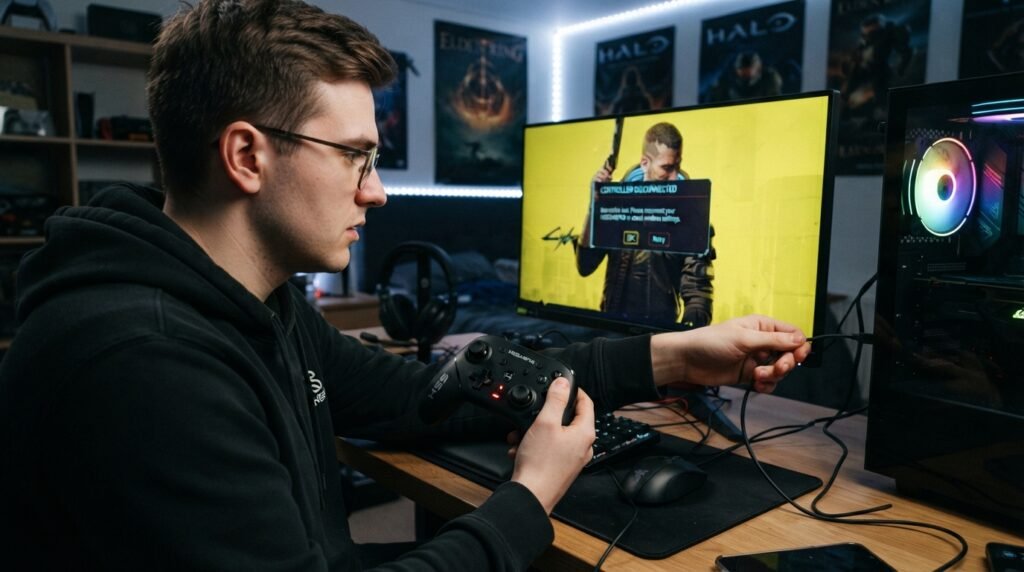


Connectivity issues HSSGamepad can be frustrating, especially when a controller appears to be connected but does not respond correctly in a game. A wireless gamepad may disconnect randomly, fail to pair, show input delays, or refuse to connect to a computer or mobile device. In many cases, the problem is not caused by a serious hardware failure. Simple issues involving Bluetooth, USB connections, drivers, batteries, interference, or device settings can interrupt communication between the controller and the gaming device.
Understanding how the controller communicates with your PC, phone, console, or other compatible hardware is the first step toward solving the problem. Once you identify whether the issue is related to pairing, power, software, or physical hardware, troubleshooting becomes much easier. This guide explains common connectivity problems, practical fixes, and ways to keep an HSSGamepad connection stable.
What Are Connectivity Issues HSSGamepad Problems?
Connectivity issues HSSGamepad problems generally refer to situations where the gamepad cannot establish or maintain a reliable connection with the device you are using. The controller may fail to appear in a Bluetooth device list, connect briefly and then disconnect, or remain connected while producing delayed or inconsistent input.
These problems can occur with wireless and wired setups. Wireless connections are particularly sensitive to battery levels, Bluetooth compatibility, signal interference, and operating-system settings. Wired connections can also experience problems when a USB cable, port, driver, or controller mode is not working properly.
“A stable controller connection depends on both the gamepad and the device receiving its input.”
That is why replacing the controller immediately is usually not the best first step. Checking the connection method and eliminating common software or setup problems can often restore normal operation.
Common Signs of HSSGamepad Connectivity Problems
One of the clearest signs of a connection problem is that the controller does not appear when you attempt to pair it. You may turn on the gamepad, activate pairing mode, and still find that your computer or phone cannot detect it. Sometimes the device appears under an unfamiliar name but fails to complete the pairing process.
Another common symptom is intermittent connectivity. The controller may work normally for several minutes before disconnecting. You might also experience input lag, buttons that stop responding temporarily, or an analog stick that appears to freeze. These symptoms can indicate a weak wireless signal, low battery, interference, or a software conflict.
| Problem | Possible Cause | Recommended First Check |
|---|---|---|
| Controller not detected | Pairing or driver problem | Restart Bluetooth and pairing mode |
| Random disconnections | Low battery or interference | Charge the controller |
| Input delay | Wireless interference | Move closer to the device |
| USB connection fails | Cable or port issue | Try another cable or USB port |
| Controller connects but does not work | Incorrect controller mode | Check input mode |
| Connection drops during gaming | Power or software issue | Check battery and drivers |
Recognizing the exact symptom can save considerable time because different problems require different solutions.
Check the Gamepad Battery First
A surprisingly large number of wireless controller problems are caused by insufficient battery power. A gamepad can sometimes remain powered on even when its battery is too weak to maintain a stable wireless connection. This can create confusing behavior because the controller’s lights may still appear to be working.
Fully charge the HSSGamepad before performing more complicated troubleshooting. If the controller has been unused for a long period, leave it connected to a reliable power source for an appropriate charging period. Avoid assuming that a flashing indicator always means the controller is ready for pairing because indicator behavior can vary between models.
If the connection becomes stable after charging, the original problem was probably power-related. If the gamepad disconnects even with a full battery, continue checking the wireless connection, pairing settings, and software.
Restart Both Devices
Restarting the controller and the device it is connected to is one of the simplest ways to resolve connectivity issues HSSGamepad users may encounter. Temporary Bluetooth errors, background processes, or driver glitches can prevent a previously working connection from functioning correctly.
Turn the gamepad off completely and restart your PC, phone, or other gaming device. After the device boots again, activate the controller’s pairing mode and try connecting it from scratch. This process can clear temporary communication errors that are otherwise difficult to identify.
A restart is particularly useful after operating-system updates or when you have connected multiple Bluetooth accessories. Sometimes the system simply needs to refresh its wireless-device list before it can recognize the controller correctly.
Remove and Re-Pair the Controller
If your device remembers the gamepad but repeatedly fails to connect, removing the existing Bluetooth profile can help. Old pairing information can occasionally become corrupted or conflict with a new connection attempt.
Open your device’s Bluetooth settings and locate the previously paired controller. Remove or forget the device, then turn Bluetooth off and back on. Put the HSSGamepad into pairing mode and search for available devices again.
This creates a fresh connection rather than relying on the previous pairing record. It is especially useful when the controller worked previously but suddenly stopped connecting after a system update, device change, or failed pairing attempt.
Move Closer to the Gaming Device
Wireless signal strength plays an important role in controller reliability. Although Bluetooth generally works over several meters, walls, furniture, electronic equipment, and the physical position of your computer can affect signal quality.
If you are experiencing connectivity issues HSSGamepad users often report as random disconnects or delayed inputs, move the controller closer to the computer or mobile device. Test it within a short distance and see whether the problem disappears.
If the controller works perfectly when nearby but becomes unstable farther away, the issue may be related to wireless range or interference rather than the controller itself. A Bluetooth adapter with a better antenna can sometimes improve reception on desktop computers.
Reduce Bluetooth Interference
Bluetooth operates in a busy wireless environment. Wi-Fi routers, wireless headphones, keyboards, mice, USB devices, and other electronics can contribute to signal congestion. In crowded environments, multiple wireless connections may compete for available radio resources.
Try temporarily disconnecting unnecessary Bluetooth devices and moving the controller away from large electronic equipment. If possible, test the gamepad in a different location. You can also experiment with changing the position of your computer’s Bluetooth antenna or adapter.
Interference is often overlooked because the controller appears to connect successfully. However, a connection can exist while still experiencing significant packet loss or latency.
Check USB Connections for Wired Mode
If your HSSGamepad supports wired operation, USB troubleshooting is another important step. A controller may fail to connect because the cable is damaged, the connector is loose, or the USB port is not providing a reliable connection.
Try another compatible USB cable if available. Some cables are designed primarily for charging and may not support data transfer, so a charging cable may power the controller without allowing the computer to communicate with it.
You should also test another USB port. Desktop computers often have ports located on both the front and rear panels, and they may behave differently depending on the hardware configuration. If the controller works with another port, the original port may be the source of the problem.
Update Bluetooth and Controller Drivers
Outdated or corrupted drivers can cause connectivity issues HSSGamepad users experience on Windows computers. Bluetooth hardware relies on system drivers to communicate correctly with wireless accessories, while certain controllers may also require appropriate input-device drivers.
Open your operating system’s device-management tools and check the Bluetooth section for driver updates. Pay attention to warning symbols that may indicate a hardware or driver problem. Updating the computer’s chipset and Bluetooth drivers can also improve compatibility.
After installing drivers, restart the computer and test the controller again. If the problem started immediately after a driver update, rolling back to a previous stable driver may sometimes be appropriate.
Check the Correct Controller Mode
Some gamepads support multiple input modes, such as different operating-system or console compatibility modes. Selecting the wrong mode can make a controller appear connected while preventing games from receiving the expected input.
If your HSSGamepad has a mode button, combination, or indicator light system, check the documentation for the appropriate mode for your device. A PC game may require a different input configuration than a mobile device or console.
This is particularly important when the controller connects successfully at the operating-system level but does not respond inside a particular game. In such cases, the wireless connection may be working correctly while the input mode is incompatible with the game’s controller system.
Test the Gamepad With Another Device
Testing the controller with another compatible device is one of the best ways to determine whether the problem comes from the gamepad or the original host device. If it connects normally to a second computer or phone, the controller itself is probably functioning correctly.
If it fails to connect across multiple compatible devices, the problem is more likely to involve the controller, battery, pairing system, firmware, or hardware. This distinction helps prevent unnecessary changes to your computer or phone.
A simple cross-device test can therefore turn a vague connectivity complaint into a much more specific diagnosis.
Check for Firmware and Software Conflicts
Some controllers receive firmware updates that improve compatibility and stability. If the manufacturer provides an official update utility or support page for your particular model, check whether a newer firmware version is available.
Be careful with unofficial firmware tools. Installing software designed for a different controller model can potentially make the device unusable. Always confirm that the firmware is intended for the exact hardware version.
You should also close controller-mapping utilities temporarily. Programs that emulate Xbox, PlayStation, or generic gamepad inputs can sometimes interfere with native controller detection. Testing without these programs can reveal whether a software conflict is responsible.
When the Controller Connects but Games Do Not Recognize It
A controller being visible in Windows or another operating system does not necessarily mean every game will recognize it. Games can use different input APIs and may support only certain controller standards.
If the HSSGamepad appears in your system’s Bluetooth or USB device list but does nothing inside a game, check the game’s controller settings. Some games require you to enable gamepad input manually.
Steam and other gaming platforms may also provide controller configuration layers. If a controller is recognized by one game but not another, compare the input settings rather than assuming the hardware is defective.
How to Prevent Future Connectivity Problems
Preventing connectivity issues HSSGamepad problems is easier when you maintain both the controller and its connection environment. Keep the battery adequately charged and avoid storing a rechargeable controller completely discharged for long periods.
You should also keep your computer’s operating system, Bluetooth drivers, and relevant gaming software reasonably up to date. When a connection suddenly becomes unstable after an update, however, check whether the update introduced a compatibility problem before installing additional software.
Avoid repeatedly pairing the same controller with many devices without removing old connections when necessary. Maintaining a clean pairing history can make troubleshooting easier and reduce confusion when several devices are nearby.
Quick Troubleshooting Checklist
| Troubleshooting Step | Why It Helps |
|---|---|
| Charge the gamepad | Eliminates low-power disconnections |
| Restart both devices | Clears temporary software glitches |
| Forget and re-pair | Creates a fresh Bluetooth profile |
| Move closer | Improves wireless signal |
| Reduce interference | Minimizes competing wireless signals |
| Try another USB cable | Identifies cable-related problems |
| Test another USB port | Checks for faulty ports |
| Update drivers | Improves hardware compatibility |
| Check input mode | Ensures the correct controller protocol |
| Test another device | Separates controller and host problems |
Working through these checks from the easiest to the most advanced is usually more efficient than changing multiple settings at once.
When Hardware May Be the Problem
If the controller repeatedly disconnects after being fully charged, fails across several compatible devices, and does not work correctly through a known-good USB cable, hardware could be responsible. Possible causes include a damaged Bluetooth component, worn USB connector, battery degradation, or internal circuit problems.
Physical damage should also be considered. A controller that has been dropped, exposed to moisture, or subjected to excessive force may develop intermittent connection problems that software troubleshooting cannot fix.
At that point, check the manufacturer’s warranty or support options if available. Avoid opening the controller unless you are comfortable working with electronics and understand that doing so may affect warranty coverage.
Final Thoughts on Connectivity Issues HSSGamepad
Connectivity issues HSSGamepad problems can often be solved without replacing the controller. Battery level, Bluetooth pairing, signal interference, USB cables, drivers, controller modes, and game-specific settings are among the most common areas to investigate.
The most effective approach is systematic troubleshooting. Start with the basics, such as charging the controller and restarting both devices. Then move toward re-pairing, driver checks, mode settings, and cross-device testing. This method helps identify the actual source instead of relying on guesswork.
A reliable controller connection ultimately depends on compatibility between the gamepad, host device, operating system, and game. Once those pieces are configured correctly, most ordinary connection problems can be resolved quickly.
Frequently Asked Questions About Connectivity Issues HSSGamepad
What should I do first when experiencing connectivity issues HSSGamepad?
Start by fully charging the controller, restarting the host device, and placing the gamepad close to it. If the problem continues, forget the existing Bluetooth connection and pair the controller again.
Why does my HSSGamepad keep disconnecting?
Repeated disconnections can be caused by a low battery, wireless interference, excessive distance, Bluetooth-driver problems, or hardware issues. Testing the controller close to the host device can help determine whether range or interference is involved.
Why is my HSSGamepad connected but not working in a game?
The controller may be connected at the operating-system level but using an incompatible input mode. Check the game’s controller settings and make sure the game supports the controller’s input protocol.
Can a USB cable cause connectivity issues HSSGamepad users experience?
Yes. A damaged cable or a cable that supports charging but not data can prevent proper wired communication. Try a known-good data-capable USB cable and another USB port.
How can I fix Bluetooth pairing problems with an HSSGamepad?
Remove or forget the existing controller from your Bluetooth settings, restart Bluetooth, activate pairing mode on the gamepad, and then create a new pairing connection. Keeping the controller close during the process can improve reliability.
Can outdated drivers cause HSSGamepad connection problems?
Yes. Bluetooth and chipset drivers can affect wireless accessory compatibility. Updating the relevant drivers may resolve connection failures, random disconnects, or recognition problems.
How do I know whether the gamepad or computer is causing the problem?
Test the HSSGamepad with another compatible device. If it works normally there, the original computer or phone is more likely to be responsible. If it fails everywhere, investigate the controller, battery, firmware, or hardware.
Are connectivity issues HSSGamepad problems always caused by faulty hardware?
No. Many connection problems are software- or configuration-related. Pairing records, Bluetooth interference, incorrect controller modes, drivers, low battery power, and incompatible game settings can all produce symptoms that look like hardware failure.