







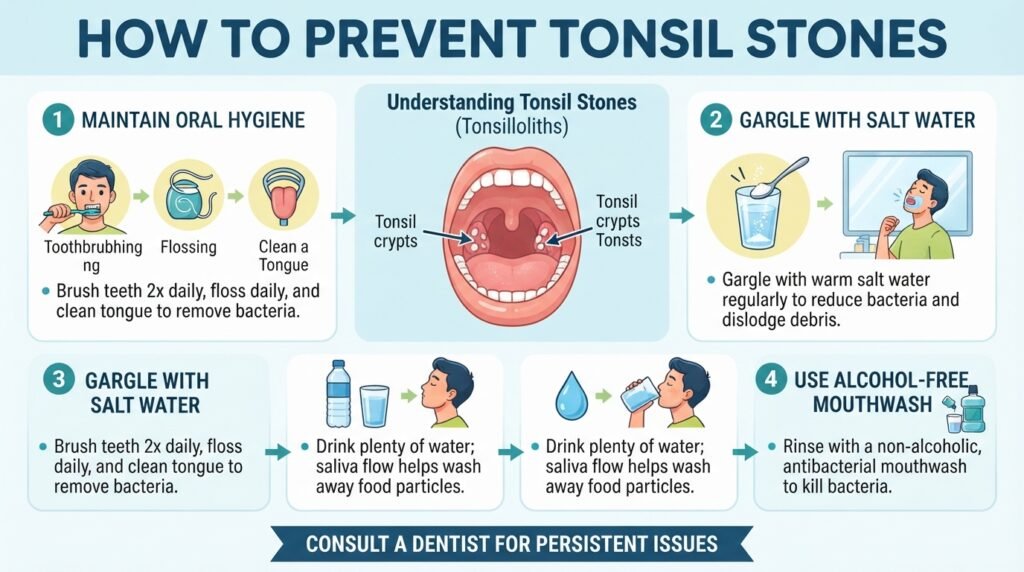


Tonsil stones are small, hardened deposits that develop inside the folds and crypts of the tonsils. They can be white, yellowish, or cream-colored and may cause symptoms such as bad breath, throat irritation, a feeling that something is stuck in the throat, or an unpleasant taste. While tonsil stones are usually not dangerous, they can be frustrating, especially when they keep coming back.
Learning how to prevent tonsil stones starts with understanding why they form. Food particles, mucus, dead cells, bacteria, and other debris can become trapped in tonsil crypts. Over time, these materials may collect and harden. Good oral hygiene, adequate hydration, and appropriate tonsil care can reduce the amount of debris available to form stones.
What Are Tonsil Stones and Why Do They Form?
Tonsil stones, medically known as tonsilloliths, are hardened collections of material that become trapped in the natural grooves of the tonsils. Everyone has slightly different tonsil anatomy, and people with deeper tonsil crypts may be more likely to develop them. The deposits can be tiny and difficult to notice or large enough to become visible at the back of the throat.
Several things can contribute to their formation. Bacteria can interact with trapped food particles, mucus, and dead cells, while minerals in saliva may help the material harden. People who frequently experience postnasal drip, chronic throat irritation, or poor oral hygiene may notice tonsil stones more often.
Understanding these causes makes how to prevent tonsil stones much easier. The goal is not to sterilize the mouth or remove every natural bacterium, because that is neither realistic nor necessary. Instead, prevention focuses on reducing the buildup of debris and maintaining a healthy mouth and throat.
“The best prevention strategy is usually consistent oral and throat hygiene rather than trying to remove tonsil stones aggressively.”
How to Prevent Tonsil Stones With Better Oral Hygiene
A strong oral hygiene routine is one of the most practical approaches to how to prevent tonsil stones. Brush your teeth at least twice a day using fluoride toothpaste, and pay attention to areas around the back teeth where food particles can accumulate. Cleaning your tongue is also useful because bacteria and debris can collect on its surface.
Flossing or using another appropriate interdental cleaning method can help remove particles from between teeth. When food remains in the mouth for long periods, bacteria can break it down and contribute to unpleasant odors. Keeping the mouth cleaner reduces the amount of material that can potentially reach the tonsil crypts.
Mouthwash may also be useful for some people, particularly when it helps control oral bacteria or freshen breath. However, mouthwash should complement brushing and flossing rather than replace them. If a particular mouthwash causes irritation or dryness, stop using it and consider discussing alternatives with a dental professional.
Stay Hydrated to Support Tonsil Health
Drinking enough water is another simple part of how to prevent tonsil stones. Saliva naturally helps wash food particles and other debris through the mouth. When your mouth becomes dry, debris may be more likely to remain on oral surfaces and around the tonsils.
Dry mouth can have many causes, including dehydration, certain medications, mouth breathing, and environmental conditions. If you frequently wake up with a very dry mouth, consider whether you are drinking enough fluids during the day. Breathing through your nose when possible can also help reduce excessive mouth dryness.
Hydration does not guarantee that tonsil stones will never form, especially if you naturally have deep tonsil crypts. Nevertheless, maintaining adequate fluid intake is a low-risk habit that supports normal saliva production and overall oral health.
Gargling and Rinsing Can Help Reduce Debris
Regular gargling is another commonly recommended habit when considering how to prevent tonsil stones. Gargling with plain water after meals may help loosen small particles that could otherwise remain in the mouth and throat. Some people also use a mild saltwater gargle for general throat comfort.
A saltwater gargle can be made by mixing a small amount of salt into warm water. The solution should not be excessively salty, and it should be gargled without swallowing it. This approach can be especially convenient after eating when brushing your teeth is not practical.
Rinsing the mouth after meals can also be useful for people who notice that certain foods tend to leave particles behind. The objective is gentle cleaning rather than forceful attempts to dislodge material from deep inside the tonsils.
Can a Water Flosser Help Prevent Tonsil Stones?
A water flosser may help with general oral hygiene by cleaning between teeth and around the gumline. Some people also use water-based devices around the tonsils, but caution is important because tonsil tissue can be sensitive and easily irritated.
If you use a water flosser near your tonsils, avoid high pressure and do not aggressively aim a strong stream into tonsil crypts. Excessive pressure may cause irritation, bleeding, or injury. For people who frequently develop stones, asking a dentist or ENT specialist about safe techniques can be more appropriate than experimenting with forceful cleaning.
Therefore, how to prevent tonsil stones is not about using the strongest possible cleaning method. Gentle, consistent hygiene is generally a better approach than repeatedly traumatizing the tonsils in an attempt to keep them completely clear.
Address Postnasal Drip and Mucus Buildup
Mucus can become part of the material trapped inside tonsil crypts. People who regularly experience allergies, sinus problems, or postnasal drip may therefore notice more throat debris. If you frequently feel mucus running down the back of your throat, addressing the underlying cause may help reduce the material available to accumulate.
Postnasal drip can occur for different reasons, including allergies, infections, environmental irritation, and nasal conditions. Treatment depends on the cause. Saline nasal rinses may be useful for some people, but they should be prepared and used safely according to appropriate medical guidance.
If persistent nasal congestion or throat mucus continues for weeks, consider speaking with a healthcare professional. Treating an underlying nasal or allergy problem may be more helpful than repeatedly trying to clean the tonsils themselves.
Avoid Smoking and Other Irritants
Smoking can negatively affect oral and throat health, and it may contribute to dryness and irritation. Tobacco smoke can also affect saliva and the tissues lining the mouth and throat. Avoiding smoking is therefore a sensible part of how to prevent tonsil stones as well as a broader strategy for protecting your health.
Other irritants may include excessive exposure to smoke, heavily polluted air, or substances that make the throat feel dry or irritated. If you notice that your throat becomes uncomfortable in particular environments, reducing exposure may help.
It is also worth remembering that persistent bad breath should not automatically be blamed on tonsil stones. Gum disease, tooth decay, dry mouth, sinus conditions, reflux, and other issues can also cause unpleasant breath. A dental or medical evaluation can help identify the actual cause.
Foods and Habits That May Reduce Debris
There is no special “tonsil stone diet” proven to completely prevent tonsilloliths. However, eating a balanced diet and maintaining good oral hygiene after meals can reduce the accumulation of food debris. Foods that easily stick around the mouth may require extra attention to brushing, rinsing, or flossing afterward.
Sugary foods and drinks can contribute to dental problems when consumed frequently, particularly when oral hygiene is inadequate. Reducing excessive sugar intake supports dental health, although avoiding sugar alone will not guarantee that tonsil stones disappear.
Chewing sugar-free gum after meals may stimulate saliva in some people and can be useful when brushing is temporarily unavailable. Choose products appropriate for your dental needs, especially if you have been advised to avoid certain sweeteners or ingredients.
How to Prevent Tonsil Stones if They Keep Coming Back
Some people develop tonsil stones despite having excellent oral hygiene. This can happen because the structure of the tonsils plays an important role. Deep or irregular tonsil crypts can create spaces where debris becomes trapped, making recurring stones more likely.
If stones repeatedly return, keep a consistent routine rather than constantly trying aggressive removal methods. Brush, floss, clean your tongue, stay hydrated, and consider gentle gargling. These habits address several factors involved in stone formation without unnecessarily irritating the tonsils.
People with frequent or troublesome tonsil stones may benefit from an evaluation by an ENT specialist. A specialist can examine the tonsils and determine whether another condition is contributing to the problem. In persistent cases, medical treatment options can be discussed based on individual circumstances.
Daily Habits for Tonsil Stone Prevention
A simple routine can make how to prevent tonsil stones much easier to remember. The following table summarizes practical habits and their purpose.
| Habit | How it may help | Helpful tip |
|---|---|---|
| Brush teeth twice daily | Removes food particles and bacteria | Spend enough time cleaning all tooth surfaces |
| Clean your tongue | Reduces surface buildup | Use a tongue scraper or toothbrush gently |
| Floss daily | Removes debris between teeth | Choose a method you can use consistently |
| Drink adequate water | Supports saliva and reduces dry mouth | Keep water available throughout the day |
| Gargle after meals | May loosen loose debris | Use gentle pressure |
| Manage postnasal drip | May reduce mucus reaching the throat | Discuss persistent symptoms with a professional |
| Avoid smoking | Reduces throat and oral irritation | Seek support if quitting is difficult |
| Visit the dentist regularly | Helps identify oral causes of bad breath | Follow your dentist’s recommended schedule |
Consistency matters more than doing everything perfectly. A realistic routine that you follow every day is generally more useful than an aggressive routine that irritates your tonsils or becomes difficult to maintain.
Common Mistakes That Can Make Tonsil Problems Worse
One mistake is repeatedly poking the tonsils with fingernails, cotton swabs, sharp objects, or other tools. Although someone may successfully remove a visible stone this way, aggressive manipulation can irritate or injure the tonsil tissue and potentially cause bleeding.
Another mistake is assuming that every white spot on the tonsil is a tonsil stone. White patches can have other causes, including infections and inflammation. If a white area is accompanied by significant pain, fever, difficulty swallowing, swelling, or other concerning symptoms, professional medical assessment is important.
Trying to completely eliminate every tonsil crypt is also unnecessary. Tonsils are normal tissues, and some degree of bacterial presence in the mouth is normal. Prevention should focus on maintaining good oral health rather than repeatedly traumatizing healthy tissue.
When Should You See a Doctor or Dentist?
Knowing how to prevent tonsil stones is useful, but recurring symptoms may deserve professional attention. Consider seeing a dentist if you have persistent bad breath, tooth problems, gum bleeding, or other oral symptoms that do not improve with good hygiene.
An ENT specialist may be appropriate when tonsil stones repeatedly return, become large, cause persistent discomfort, or interfere with swallowing. A professional can determine whether the stones are actually responsible for your symptoms and whether treatment is necessary.
Seek prompt medical attention if you experience severe difficulty breathing or swallowing, significant swelling, severe throat pain, high fever, or rapidly worsening symptoms. These symptoms may indicate a problem that requires more urgent evaluation rather than routine tonsil-stone prevention.
Tonsil Stone Prevention vs. Tonsil Stone Removal
Prevention and removal are related but different goals. Prevention focuses on reducing the accumulation of debris, while removal deals with a stone that has already formed. A person may remove an existing stone and still develop another one later if the underlying factors remain.
This is why how to prevent tonsil stones should focus on long-term habits. Good oral hygiene, hydration, gentle rinsing, and appropriate management of nasal or throat issues may reduce recurrence for some people.
| Prevention | Removal |
|---|---|
| Focuses on long-term habits | Focuses on an existing stone |
| Includes oral hygiene | May involve gentle professional or home care |
| Supports hydration | Does not necessarily prevent recurrence |
| Addresses contributing factors | Deals with current symptoms |
| Requires consistency | May provide short-term relief |
If stones continue appearing despite sensible prevention efforts, that does not mean you are doing something wrong. Anatomy and individual health factors can make recurring tonsilloliths difficult to prevent completely.
Frequently Asked Questions
How to prevent tonsil stones naturally?
The most practical natural approach to how to prevent tonsil stones is maintaining consistent oral hygiene, drinking enough water, cleaning the tongue, flossing, and gently rinsing or gargling after meals. Managing conditions that cause excessive mucus or dry mouth may also help.
There is no guaranteed natural method that prevents every tonsil stone. If you frequently develop stones despite good habits, an ENT specialist can assess whether deep tonsil crypts or another issue is contributing to recurrence.
Does brushing your tongue help prevent tonsil stones?
Yes, tongue cleaning can be a useful part of how to prevent tonsil stones because it removes bacteria and debris from the tongue’s surface. This supports overall oral hygiene and may help reduce the amount of material available in the mouth.
However, tongue cleaning should be gentle. Scrubbing aggressively can irritate the tongue without providing additional benefits. Combine tongue cleaning with brushing, flossing, and regular dental care.
Can drinking water prevent tonsil stones?
Adequate water intake may support how to prevent tonsil stones by helping maintain saliva and reducing dry-mouth conditions. Saliva naturally helps move food particles and other material through the mouth.
Water is not a guaranteed cure or prevention method. People with deep tonsil crypts may still develop stones even when they are well hydrated, so hydration should be viewed as one part of a broader oral hygiene routine.
Does saltwater gargling prevent tonsil stones?
Gentle saltwater gargling may help loosen debris and soothe the throat for some people, making it a reasonable part of how to prevent tonsil stones. It should not, however, be considered a guaranteed prevention method.
Avoid extremely concentrated solutions and do not swallow the gargle. If gargling causes pain, irritation, or bleeding, stop and seek professional advice if symptoms continue.
Why do I keep getting tonsil stones even though I brush my teeth?
Recurring tonsil stones can happen even with excellent oral hygiene because tonsil anatomy matters. Deep crypts can trap mucus, food particles, and dead cells, creating an environment where stones can form.
If you consistently practice good oral hygiene but continue to experience frequent stones, how to prevent tonsil stones may require looking beyond brushing alone. An ENT specialist can examine your tonsils and discuss appropriate options.
Can tonsil stones go away permanently?
Some people experience tonsil stones only occasionally, while others have recurring problems. Improving oral hygiene and addressing contributing factors may reduce how often they appear, but there is no universal guarantee that they will disappear permanently.
For people with frequent, troublesome stones, a healthcare professional can discuss whether additional treatment is appropriate. The best option depends on the person’s symptoms, tonsil anatomy, and overall health.
Conclusion
Understanding how to prevent tonsil stones is mainly about creating simple habits that reduce the buildup of food particles, bacteria, mucus, and dead cells around the tonsils. Brushing twice daily, cleaning the tongue, flossing, drinking enough water, and gently rinsing after meals are practical places to start.
It is equally important to avoid aggressive cleaning techniques that can damage sensitive tonsil tissue. If tonsil stones continue to recur, cause significant discomfort, or are accompanied by concerning symptoms, professional evaluation is the safest next step.
The key is consistency. You do not need an extreme routine or expensive products to support healthier tonsils. A sensible oral hygiene routine combined with proper attention to hydration, nasal health, and professional dental or ENT care can make a meaningful difference for many people.