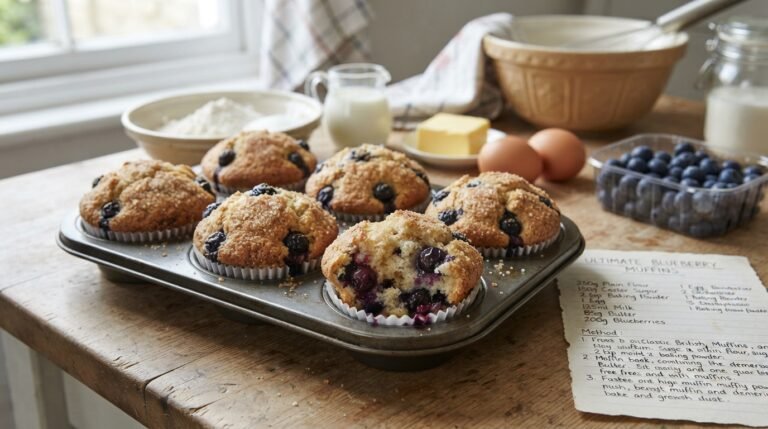







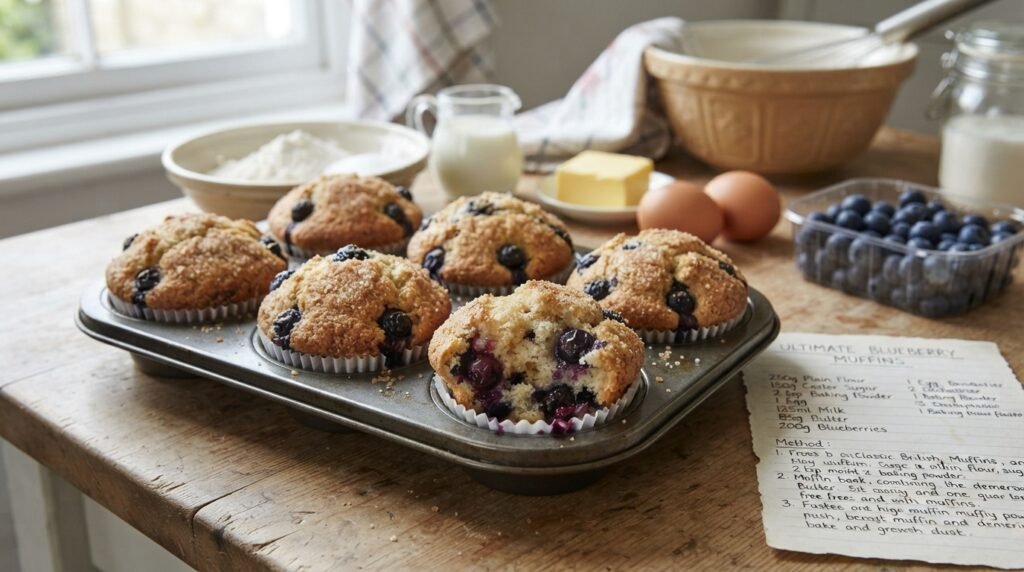


If you are looking for a reliable blueberry muffin recipe UK bakers can make without complicated ingredients or specialist equipment, you are in the right place. These homemade blueberry muffins are soft in the centre, lightly golden on top, and packed with juicy blueberries in every bite. They are perfect for breakfast, an afternoon treat, a lunchbox, or a relaxed weekend bake.
The beauty of a good muffin is its simplicity. You do not need advanced baking skills to get excellent results. With everyday ingredients, a few simple mixing techniques, and the right oven temperature, you can make bakery-style muffins at home. This recipe also includes useful UK measurements, practical baking tips, ingredient substitutions, and answers to common questions so you can bake with confidence.
“A great blueberry muffin should be tender, lightly golden, bursting with fruit, and delicious enough to make you reach for a second one.”
Why This Blueberry Muffin Recipe Is Perfect for UK Bakers
This blueberry muffin recipe UK readers can easily follow is designed around ingredients that are widely available in British supermarkets. You can use fresh or frozen blueberries, ordinary self-raising flour or plain flour with baking powder, and standard UK kitchen measurements. There is no need for unusual ingredients or specialist baking equipment.
The recipe is also flexible enough for different preferences. If you like a sweeter muffin, you can add a little extra sugar. If you prefer a more delicate flavour, reduce it slightly. You can also add lemon zest, vanilla, or a crunchy sugar topping for an extra bakery-style finish. The key is keeping the batter light and avoiding overmixing.
Ingredients You Need for Homemade Blueberry Muffins
For this blueberry muffin recipe UK version, you only need a handful of straightforward ingredients. Fresh blueberries are ideal when they are in season, but frozen berries work extremely well too. If using frozen fruit, there is generally no need to thaw it first because thawed berries can release excess liquid and colour into the batter.
Here is a simple ingredient guide:
| Ingredient | Approximate amount | Purpose |
|---|---|---|
| Self-raising flour | 250g | Creates the muffin structure |
| Caster sugar | 125g | Adds sweetness |
| Baking powder | 1 tsp | Helps create a lighter texture |
| Eggs | 2 large | Adds structure and richness |
| Milk | 120ml | Provides moisture |
| Unsalted butter | 100g, melted | Adds flavour and tenderness |
| Blueberries | 175–200g | Provides the fruity flavour |
| Vanilla extract | 1 tsp | Enhances the overall taste |
| Lemon zest | Optional | Adds freshness |
If you only have plain flour, you can still make these muffins. Use plain flour with baking powder rather than changing the entire recipe. You can also replace some of the milk with natural yoghurt if you want a slightly richer, softer crumb.
How to Prepare the Muffin Batter
The first important step in this blueberry muffin recipe UK is preparing the ingredients before you start mixing. Preheat your oven to around 180°C conventional or approximately 160°C fan. Line a 12-hole muffin tin with paper cases. Melt the butter and allow it to cool slightly so it does not cook the eggs when combined.
In one bowl, mix the dry ingredients together. In another bowl, whisk the eggs, milk, melted butter, and vanilla extract. Pour the wet ingredients into the dry ingredients and gently fold them together. The batter should look slightly lumpy rather than perfectly smooth. That is exactly what you want.
Add the blueberries towards the end and fold them through carefully. Avoid vigorous stirring because it can crush the berries and turn the batter purple. Overmixing is one of the most common reasons homemade muffins become dense rather than light and tender.
The Best Way to Bake Blueberry Muffins
For this blueberry muffin recipe UK, divide the batter evenly between the paper cases. Filling them around two-thirds to three-quarters full usually gives you a good rise without creating excessive overflow. If you want taller muffin tops, you can fill the cases slightly more, but leave enough room for the batter to expand.
Bake the muffins for approximately 20–25 minutes, depending on your oven. They should look golden on top and feel lightly springy when gently pressed. A skewer inserted into the centre should come out clean or with a few moist crumbs, although it may touch a blueberry during testing.
Do not open the oven repeatedly while the muffins are rising. A sudden temperature change can affect the structure and prevent them from developing a good domed top. Once baked, leave them in the tin for a few minutes before transferring them to a wire rack.
Fresh or Frozen Blueberries: Which Is Better?
Both fresh and frozen blueberries can produce excellent results with this blueberry muffin recipe UK. Fresh blueberries are particularly good during their peak season because they tend to have a bright flavour and firm texture. Wash them gently and dry them thoroughly before adding them to the batter.
Frozen blueberries are an excellent option when fresh berries are expensive or unavailable. Add them directly from the freezer rather than thawing them. Frozen berries can release a lot of juice when defrosted, which may make the batter wetter and cause more colour bleeding.
For an attractive finish, you can reserve a few blueberries and gently press them onto the tops of the muffins before baking. This makes the fruit visible and gives the finished muffins a bakery-style appearance.
How to Get Soft and Moist Muffins
The secret behind a successful blueberry muffin recipe UK is not simply the ingredients. Your mixing technique matters just as much. Muffin batter should be mixed only until the ingredients are combined. A few small lumps are completely acceptable.
Too much mixing develops the gluten in the flour, resulting in a chewy or tough texture. For soft muffins, fold the ingredients gently with a spatula and stop as soon as you no longer see large patches of dry flour.
The fat and liquid also contribute to moisture. Melted butter gives the muffins a rich flavour, while milk helps create a tender crumb. Some bakers like adding yoghurt or sour cream for extra moisture, although the basic recipe does not require it.
Simple Ways to Add More Flavour
A classic blueberry muffin recipe UK does not need many extras, but a few small additions can make the flavour even more interesting. Lemon zest is one of the best choices because its fresh citrus aroma complements sweet blueberries beautifully.
Vanilla extract is another easy addition. For a slightly crunchy top, sprinkle a little demerara sugar over the batter before placing the tray in the oven. You could also add a light lemon glaze after the muffins have cooled if you want something more indulgent.
Other flavour ideas include:
- A small amount of cinnamon
- White chocolate chips
- A little almond extract
- Lemon zest and juice
- Chopped almonds
- A light streusel topping
Choose one or two additions rather than adding everything at once. Blueberries should remain the main flavour.
Common Mistakes to Avoid When Baking Muffins
Even a straightforward blueberry muffin recipe UK can go wrong if a few basic baking principles are overlooked. One of the biggest mistakes is overmixing the batter. It is tempting to keep stirring until everything looks completely smooth, but muffin batter should remain slightly uneven.
Another common problem is using too much flour. If you measure flour by scooping directly from the bag, you can accidentally add more than the recipe requires. For the most consistent results, weigh the flour using kitchen scales.
Avoid overbaking as well. Muffins continue cooking from residual heat after they come out of the oven. Once the tops are golden and a skewer shows that they are cooked, remove them from the oven.
How to Store Homemade Blueberry Muffins
Once your blueberry muffin recipe UK bake has cooled completely, store the muffins in an airtight container at room temperature. They are usually best enjoyed within two or three days because their texture gradually becomes drier over time.
If you want to keep them for longer, freezing is a better option. Place completely cooled muffins in a freezer-safe container or bag, separating layers if necessary. They can then be defrosted at room temperature or gently warmed in the oven or microwave.
Avoid storing warm muffins in a sealed container because trapped steam can make the tops sticky and affect their texture. Let them cool properly before covering them.
How to Make Bakery-Style Muffin Tops
One of the most appealing features of a professional blueberry muffin recipe UK is a tall, golden muffin top. Getting that look at home depends on the batter consistency, oven temperature, and how full you make the cases.
A slightly thicker batter generally helps the muffins hold their shape. Make sure your oven is fully preheated before the tray goes in. You can also sprinkle a little coarse sugar over the tops before baking to create a crisp, attractive crust.
Another useful trick is to avoid repeatedly opening the oven door. Consistent heat helps the muffins rise properly and develop a beautiful golden surface.
Serving Ideas for Blueberry Muffins
Freshly baked muffins are delicious on their own, but there are plenty of ways to serve them. For breakfast, pair a warm muffin with tea, coffee, or a glass of milk. A little butter can also be spread over a warm muffin if you enjoy a richer texture.
For an afternoon treat, serve them alongside fresh fruit or yoghurt. If you are entertaining guests, dust the cooled muffins lightly with icing sugar or add a simple lemon drizzle for an elegant presentation.
These muffins also work well in lunchboxes and picnics. Once cooled, wrap them individually or place them in a suitable container so they remain easy to transport.
Nutrition and Portion Considerations
A homemade blueberry muffin recipe UK gives you more control over the ingredients than many packaged bakery products. You can adjust the sugar, choose the type of flour, and control the amount of fruit and fat used in the recipe.
However, the exact nutritional value depends on the ingredients and portion size. If you need precise calorie, carbohydrate, fat, protein, or sugar information, calculate it using the specific products and quantities you use.
For a lighter variation, you can reduce the sugar modestly, use part wholemeal flour, or replace some of the butter with yoghurt. Keep in mind that significant ingredient changes can affect the texture and rise.
Easy Variations to Try at Home
Once you have mastered this blueberry muffin recipe UK, experimenting becomes easy. Try adding lemon and blueberries for a fresh citrus flavour, or combine blueberries with a small amount of white chocolate for a sweeter dessert-style muffin.
You can also experiment with wholemeal flour. Replacing a portion of the self-raising flour with wholemeal flour adds a slightly nutty flavour and a heartier texture. If you make substantial substitutions, add enough liquid to maintain a soft batter.
For a vegan version, plant-based milk and dairy-free butter can be used alongside an appropriate egg substitute. The result may have a slightly different texture, but careful mixing and accurate measurements can still produce delicious muffins.
Quick Recipe Summary
Here is a convenient overview of the blueberry muffin recipe UK so you can quickly check the key details while baking.
| Recipe detail | Information |
|---|---|
| Preparation time | About 15 minutes |
| Baking time | About 20–25 minutes |
| Oven temperature | 180°C conventional / 160°C fan |
| Servings | Approximately 10–12 muffins |
| Main fruit | Blueberries |
| Skill level | Easy |
| Best for | Breakfast, snacks, lunchboxes and afternoon tea |
| Storage | Airtight container for 2–3 days |
| Freezer friendly | Yes |
Why Homemade Muffins Are Worth Making
There is something especially satisfying about making a blueberry muffin recipe UK from scratch. The aroma that fills the kitchen while the muffins bake is difficult to beat, and homemade muffins allow you to control everything from the amount of sugar to the quantity of fruit.
They are also convenient. Once you have the basic technique, you can prepare a batch quickly without relying on expensive bakery products. The same basic method can be adapted for raspberries, blackberries, chocolate chips, apples, or other seasonal ingredients.
“The best homemade bakes are often the simplest ones: good ingredients, careful mixing, and a little patience.”
Conclusion
This blueberry muffin recipe UK is an easy and dependable choice when you want soft, fruity muffins without complicated baking techniques. With simple supermarket ingredients, careful folding, and the right oven temperature, you can create muffins with golden tops and a tender centre.
The most important lessons are to measure your ingredients accurately, avoid overmixing, handle blueberries gently, and take care not to overbake. Whether you use fresh berries in summer or frozen blueberries throughout the year, this recipe can become a dependable favourite for breakfast, afternoon tea, family gatherings, and everyday snacking.
Once you have mastered the basic method, feel free to experiment with lemon zest, crunchy sugar toppings, white chocolate, or wholemeal flour. Keep the basic technique consistent, and you will have a versatile homemade muffin recipe that can be adapted to suit your taste.
Frequently Asked Questions
What makes this blueberry muffin recipe UK-friendly?
This blueberry muffin recipe UK uses ingredients and measurements that are easy to find in British supermarkets and kitchens. It also provides oven temperatures suitable for both conventional and fan ovens, making it straightforward for UK home bakers.
The recipe is deliberately simple, so you do not need specialist baking equipment. Kitchen scales, a mixing bowl, a muffin tin, paper cases, and a standard oven are enough.
Can I use frozen blueberries in this blueberry muffin recipe UK?
Yes, frozen blueberries work very well in this blueberry muffin recipe UK. In fact, they are a convenient choice when fresh berries are unavailable or expensive. Add them while frozen rather than thawing them first.
Thawed berries can release extra liquid and may turn the batter purple. Frozen fruit generally holds its shape better during mixing and baking, although some colour bleeding is still completely normal.
How do I stop blueberry muffins from becoming dense?
The main thing is to avoid overmixing. When flour is mixed too aggressively, gluten develops and the muffins can become tough or dense. Fold the wet and dry ingredients together gently and stop once they are just combined.
Accurate measurements also matter. Too much flour can make the batter heavy and dry, while insufficient liquid can prevent the muffins from developing a tender crumb.
How long will homemade blueberry muffins stay fresh?
A freshly baked blueberry muffin recipe UK batch is generally best when eaten within two or three days. Store completely cooled muffins in an airtight container at room temperature.
For longer storage, freeze the muffins once they have cooled. Properly wrapped muffins can be kept in the freezer and reheated or defrosted whenever you want a quick homemade treat.
Can I make this blueberry muffin recipe UK with plain flour?
Yes. You can adapt the blueberry muffin recipe UK by using plain flour together with baking powder rather than relying on self-raising flour. Make sure the raising agent is evenly distributed through the dry ingredients before adding the wet mixture.
This substitution is useful if plain flour is what you already have in your cupboard. The final muffins can still be light, soft, and delicious when the quantities are balanced correctly.
Why are my blueberry muffins not rising properly?
Several factors can prevent muffins from rising. Your raising agent may be old, the batter may have been overmixed, or the oven may not have been sufficiently hot when the muffins went in.
For the best results, preheat the oven fully, check that your baking powder is fresh, and mix the batter gently. Avoid opening the oven door frequently while the muffins are baking.
Can I add lemon to this blueberry muffin recipe UK?
Absolutely. Lemon is one of the best flavour pairings for blueberries. Adding a little finely grated lemon zest gives the muffins a fresh, fragrant flavour without changing the basic recipe significantly.
You can also make a simple lemon glaze for cooled muffins if you want a sweeter finish. Just remember that a small amount of lemon zest is usually enough to enhance the fruit without overpowering it.
Can I freeze muffins made with this recipe?
Yes, muffins made with this blueberry muffin recipe UK freeze well. Allow them to cool completely before placing them into a freezer-safe bag or container. Remove as much excess air as practical before sealing.
When you want to enjoy one, allow it to defrost at room temperature or warm it gently. This makes homemade blueberry muffins a convenient option for busy mornings and unexpected guests.